
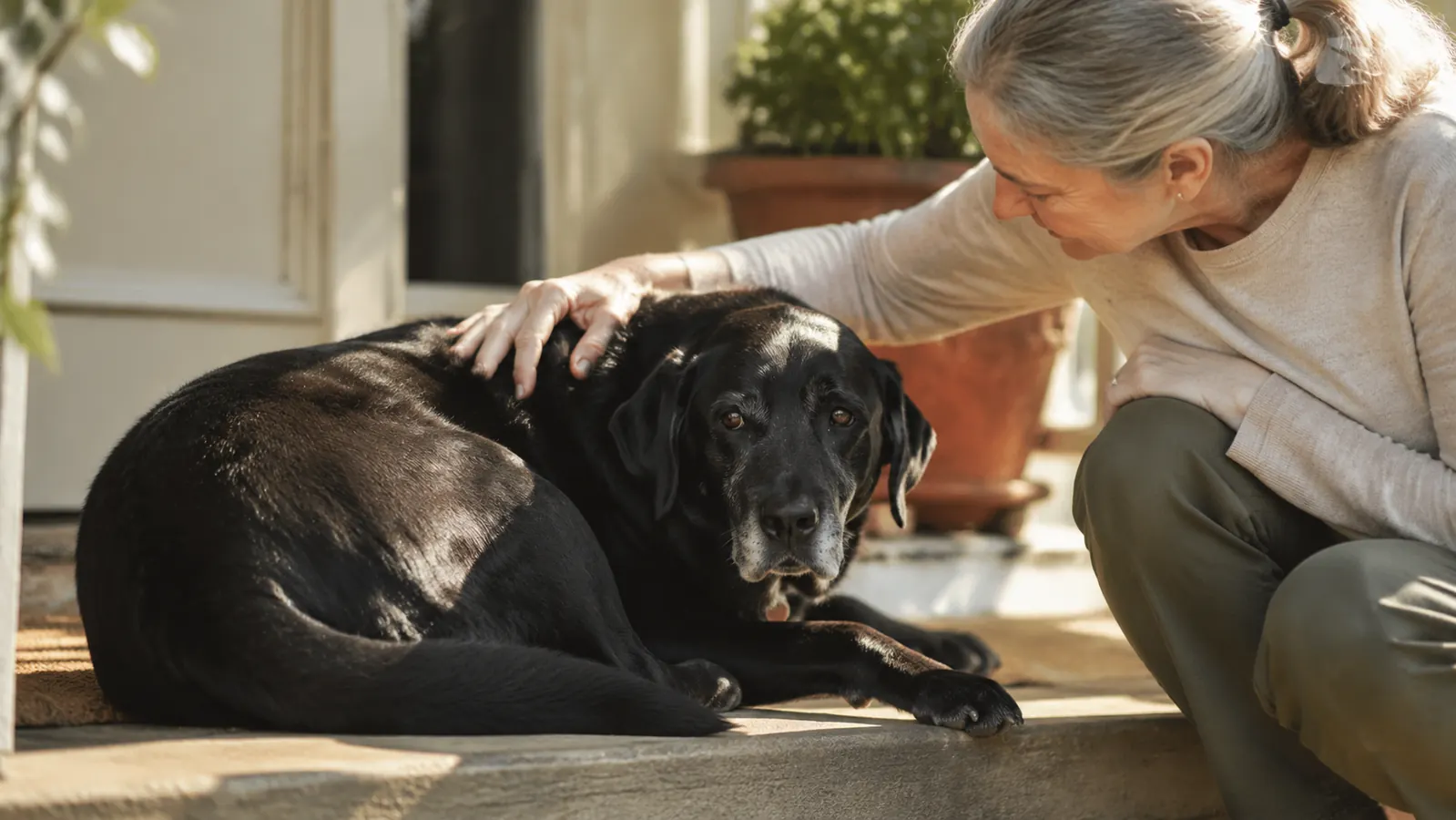
My black Lab Rocky turned twelve in March. He is 78 pounds of mostly good years, and through the winter I watched a dog I have known my whole adult life start to move like an old man. He went stiff after naps. He slowed at the stairs. For the first time ever, he passed up the couch. I told myself it was just age. Some of it is. But most of it was worth catching earlier than I did, and the fix that finally helped Rocky was simple: a daily chewable from Nutramax called Cosequin, slipped in with his dinner.
Here is the thing nobody says plainly about senior dog joints. By the time a dog shows you the first sign, the wear inside the joint has usually been building for a while. So these are the ten signs I now recognize in Rocky, the same ones vets watch for, roughly in the order they tend to appear. If your dog checks off two or three, it is worth asking your vet about daily joint support the way I did. It is not a fix-all. Nothing is. But six months in, the small daily difference in how easily Rocky moves has been worth every bit of the habit.
The daily chew I settled on for Rocky's joints
After my vet's recommendation I landed on Cosequin from Nutramax, 132 chewable tablets sized for a large dog. This is the supplement Rocky has taken every day with his dinner for the past six months.
Amazon Check Today's Price on Amazon →He is stiff after every nap
The clearest early sign in Rocky was the first few steps after lying down. He would get up, take three slow, short steps, then warm into a normal walk. That stiffness right after rest is often joint fluid settling overnight, and it is the sign vets tell me to take seriously because it tends to show up well before the bigger problems do. Once I started Rocky on daily Cosequin, it was the first thing I noticed ease.
He hesitates at the bottom of the stairs
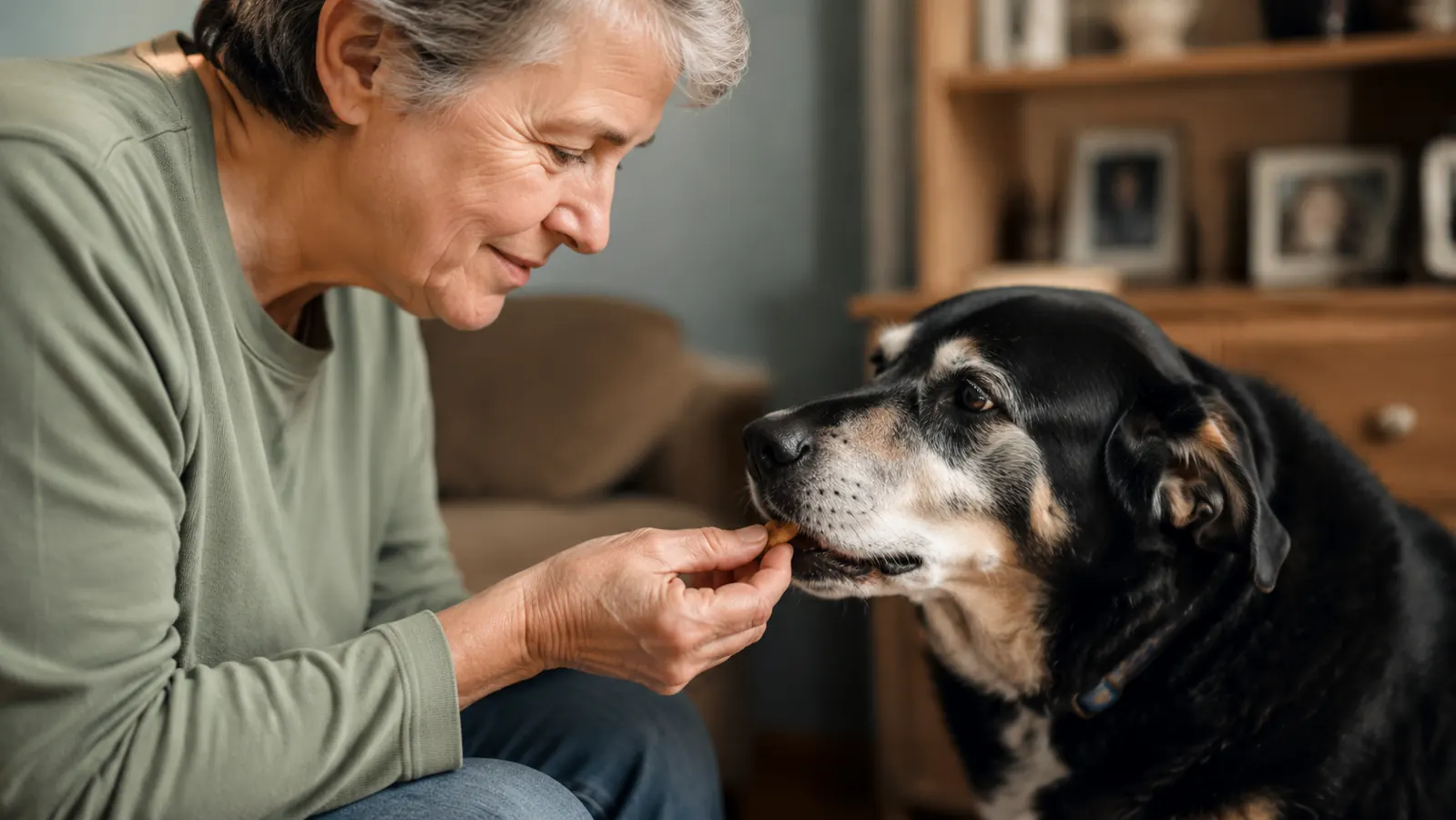
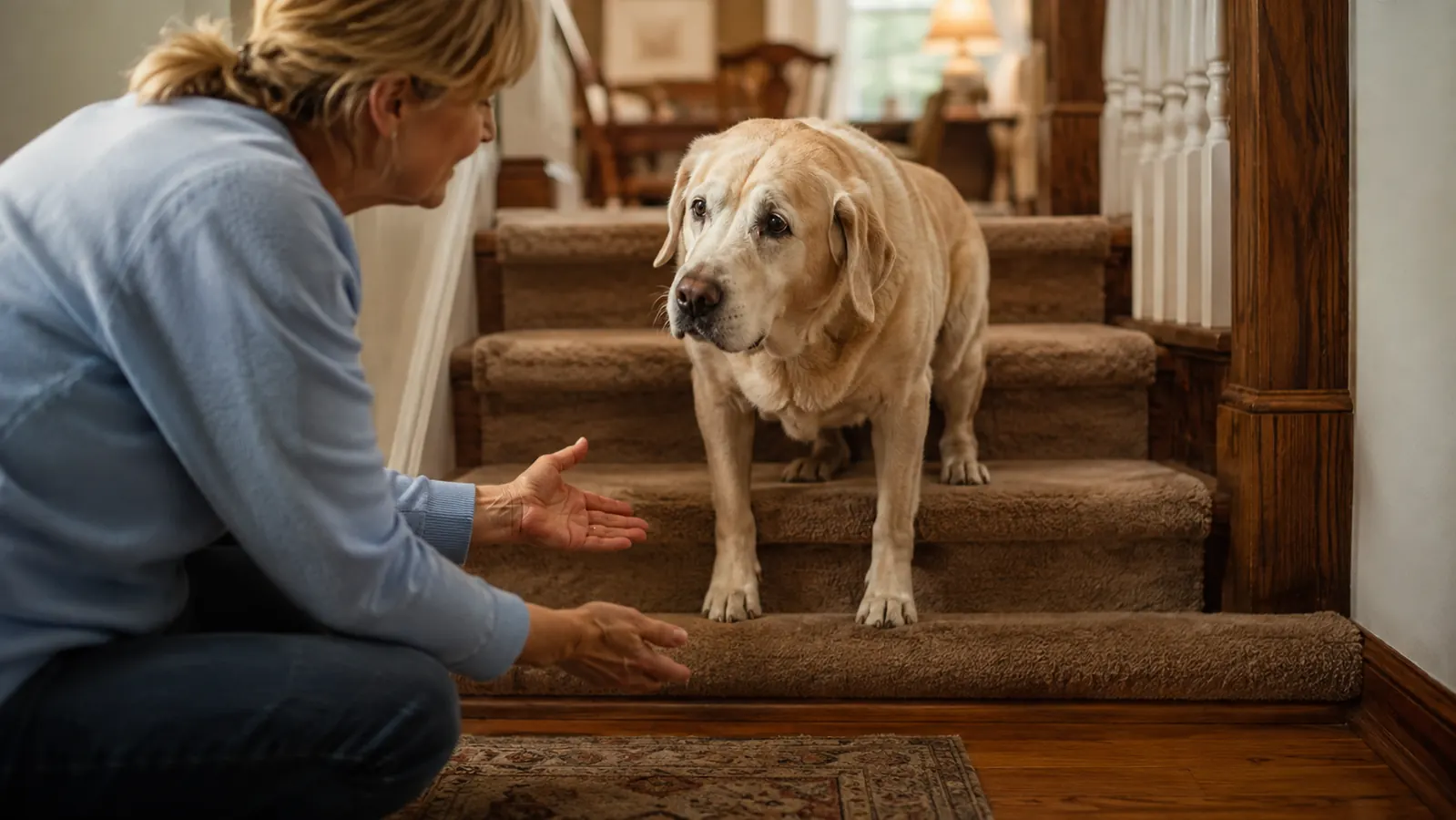
Rocky used to take the stairs two at a time on the way down. Last fall he started pausing at the top step, gathering himself, then going one careful step at a time. A dog who suddenly thinks about a staircase he has used daily for years is telling you the descent hurts. This is one of the clearest signals that his rear joints were asking for real, daily support rather than a one-off fix.
He stops jumping up
The couch, the bed, the passenger seat of the truck. Each one used to be nothing. When Rocky started circling the couch and whining instead of launching, I knew it was not laziness. Jumping loads the rear joints hardest, so a dog who loves to nap on the couch and suddenly will not jump up has good reason. We keep a ramp by the couch now, and it pairs beautifully with the joint routine.
He lags a few steps behind on walks
Rocky still pulls on the leash the first fifty yards, then settles to my pace, then gradually drifts behind me. The drift is the tell. He is fine once warm, but the joints complain the longer he goes. I now plan his route for distance, I keep the pace sedate, and I let him set it instead of pushing him. His arthritis has not gone away, and I do not pretend it has, but the walks have gotten easier to enjoy together again.
He licks one leg at night
This was the sign I almost dismissed. Around nine in the evening Rocky would stretch out and start licking his left hip, sometimes for twenty minutes. A dog does not chew on a joint that feels fine. Persistent licking at the same spot is how a dog self-medicates a sore, achy joint, and it is the tell my vet takes most seriously of all.
He gets cranky out of nowhere
This one sneaks up on you because it looks like manners, not arthritis. Rocky has always been gentle. One day my wife reached to pat his hip the way she always has and he snapped a low warning, then looked ashamed. Pain changes temperament. A senior dog who starts growling when you touch a specific spot is guarding a joint that hurts, and the patience to read it as pain instead of a bad mood is the whole trick.
He bunny hops with his back legs together
On the stairs and on a trot, watch the back end. When a dog starts moving both rear legs together in a little hop instead of striding one after the other, he is protecting a painful hip or knee by reducing how much that joint has to flex. It is subtle until you know to look for it, then you see it everywhere. It was one more tile in the pattern I brought to my vet.
He struggles to get up off the floor
Rocky used to pop up like a spring. By late fall he would push his chest up first, brace, then rock his rear end upright, sometimes grunting. Getting up off the floor is a full squat for a dog, and it is one of the hardest moves for stiff rear joints. If your dog winces or pauses halfway, write it down and start the conversation with your vet.
He naps more and plays less
Rocky still loves his squeaky ball, but last winter he started choosing his bed over the game after a single toss. A dog lands from play and it hurts to restart, so he stops asking. The dropped interest is real, and in our case it was the joints, not laziness, behind the couch naps. Motivating a dog to move becomes half the battle, which is why the daily habit matters more than any single fix.
The limp that comes and goes, worse on cold mornings
The first few limps I wrote off as a stone in his paw. Then I noticed the pattern. It was always the same leg, and it was always worst first thing on a cold, damp morning, then it faded once he moved. That comes-and-goes pattern on the same leg is classic joint stiffness, not a foot injury, and it is the sign that took me to the vet for good, where I first heard the case for a daily chew like Cosequin.
The sign I trust most is Rocky licking his left hip at night. A dog does not chew on a joint that feels fine.
What I'd Skip
While I sorted all this out, I also learned what to skip. I would skip the cheap gimmick chews that list glucosamine last and sugar first, skip any bottle promising a miracle, and skip waiting until a dog refuses to move before doing anything. Joint support is a daily habit, not a rescue. I would also skip treating this whole list as a replacement for a vet visit: I used these signs to prompt the conversation, not to diagnose on my own. The vet, not a listicle, told me what dose of Nutramax Cosequin fit a 78-pound dog, and that is the number that matters. And I would skip pretending it works overnight. It took a good few weeks of the daily chew before I saw Rocky's first gentle steps after a nap get a little smoother. Patience is part of the plan.
Start the daily joint habit before the signs pile up
If your senior dog is checking off two or three of these, you have caught it earlier than most. Cosequin from Nutramax is the chew I have used with Rocky every day for six months, and it is where I would start the conversation with your vet. Nutramax makes the version I trust.
Amazon Check Today's Price on Amazon →