

Every night for two years I watched my dog Molly circle her old blanket bed twice, pause until her knees had the nerve to go stiff, and then fold straight down with a thud you could hear from the kitchen. She is an 11-year-old dachshund mix, about 14 pounds, and her spine has done plenty of climbing in its time. When a dog that small has to brace before lying down, foam and fabric start to matter more than I ever thought they would, and that is how I ended up six months deep into a Bedsure orthopedic dog bed.
I want to be clear about what this review is and is not before I get into foam. I did not run a lab test and I am not a vet. I am the person who bought this Bedsure bed on a budget, washed the cover every ten days for six months, and watched one small, aging dog actually change the way she sleeps. That is the evidence I can give you, and I have found it tells more of the truth than the star ratings on the listing, which read like they were all written in the first happy week.
The short version if you want it now: the dense foam holds its shape after half a year, the removable cover lives through machine washing without quitting, the new-bed smell airs out in a day, and the biggest honest problem is sizing, because the small dogs in the title really does mean small. That is the whole article in a paragraph. The rest is the proof.
The Quick Verdict
After six months the Bedsure holds its shape, the cover machine-washes clean every ten days, and my dog stopped bracing before she lies down. The one honest caveat is size: the small dogs sizing runs snug, so order up for any dog between sizes.
Amazon Check Today's Price →See if Orthopedic Is Worth It for Your Own Senior Dog
The value of any orthopedic bed is whether your dog actually uses it and whether the foam survives the daily wear. I ran six months of that test for a 14-pound dachshund. Check today's price and the real size chart on Amazon, then compare the raised-edge design against how your own dog sleeps.
Amazon Check Today's Price on Amazon →Six Months of Daily Use
Molly has slept on the Bedsure every single night since late February, which makes it six months of daily wear as of this writing. I bought the small size because the listing says small dogs and because the space beside our bed is tight. That was the first lesson: the small dogs sizing runs snug. For a 14-pound dog with a habit of curling into a tight C, it fits. If your dog sleeps stretched out, or if you are between sizes, go up a notch and do not apologize for it.
In the first two weeks I sat and watched more than I should admit. The bed has raised, padded edges on three sides, and Molly took to them like they had been placed there for her spine. She puts her head on the raised edge the way a person rests on a support pillow. Most nights she is fully asleep in under five minutes, and six months in that first-position habit has not faded.
The change I can measure is the brace. Before, she would stand over the flat blanket bed, rock once, rock twice, then drop. Now she steps into the shallow, scooped center and sinks. She still sighs. She does not brace. For a dog whose back did a lot of work before I got smarter about it, that is the whole deal.
I keep a simple sleep log the way I keep a log of her meals, one line each morning about whether she slept deep, restless, or up in the night. Before the bed, restless showed up three or four nights a week. Six months in, the last restless night I logged was back in May, and that was the night of a thunderstorm. I trust the log more than my memory of how she used to sleep, and the log is clean.
What the Foam Is Really Doing After Six Months
The label calls it orthopedic foam, and the honest answer is that the foam is denser than the foam in a cheap sixty-dollar bed and softer than raw memory foam you would sink into and never get out of. Bedsure lands in the middle: firm enough to hold a 14-pound dog up off the cold floor, soft enough on top that she does not fight it.
Six months in the foam still has its shape. I press a hand into the deepest spot where she sleeps and it springs back within a few seconds. There is no permanent trough, which is the first thing that gives away foam that is not going to last. The base under the foam does not sag against the floor either, and I check by lifting one corner and letting the whole thing settle.
I also work a finger down the side seam each month to feel whether the foam has gone grainy or begun to crumble, which is what cheap foam does once it beats its lifespan. After six months it still feels whole and firm. I would not promise you ten years, and no one selling a bed at this price should, but I would bet on it outlasting the fluffy bed I threw out after a single year before this one.
One thing I want to be straight about: a 14-pound dog is not going to punish a mattress the way a fifty-pound dog will. If I owned the bigger dog my neighbors do, I would expect more visible wear at month nine than I have seen at month six. The foam is holding up exactly as it should for a dog this size, and no better, which is the honest sentence I should not skip.
The change I can measure is the brace. She used to rock, then drop. Now she steps in, sinks, and does not brace.
The New-Bed Smell, and Why It Is Not the Last Wash
Out of the box it had the classic new-foam smell. It was not a disaster and it did not knock me out, but it was there, and I would not put a dog with a sensitive nose on it for the first day without airing it first. I left it outside on the porch for a full day in the shade and the smell faded to nearly nothing. That is the handling I would recommend to anyone.
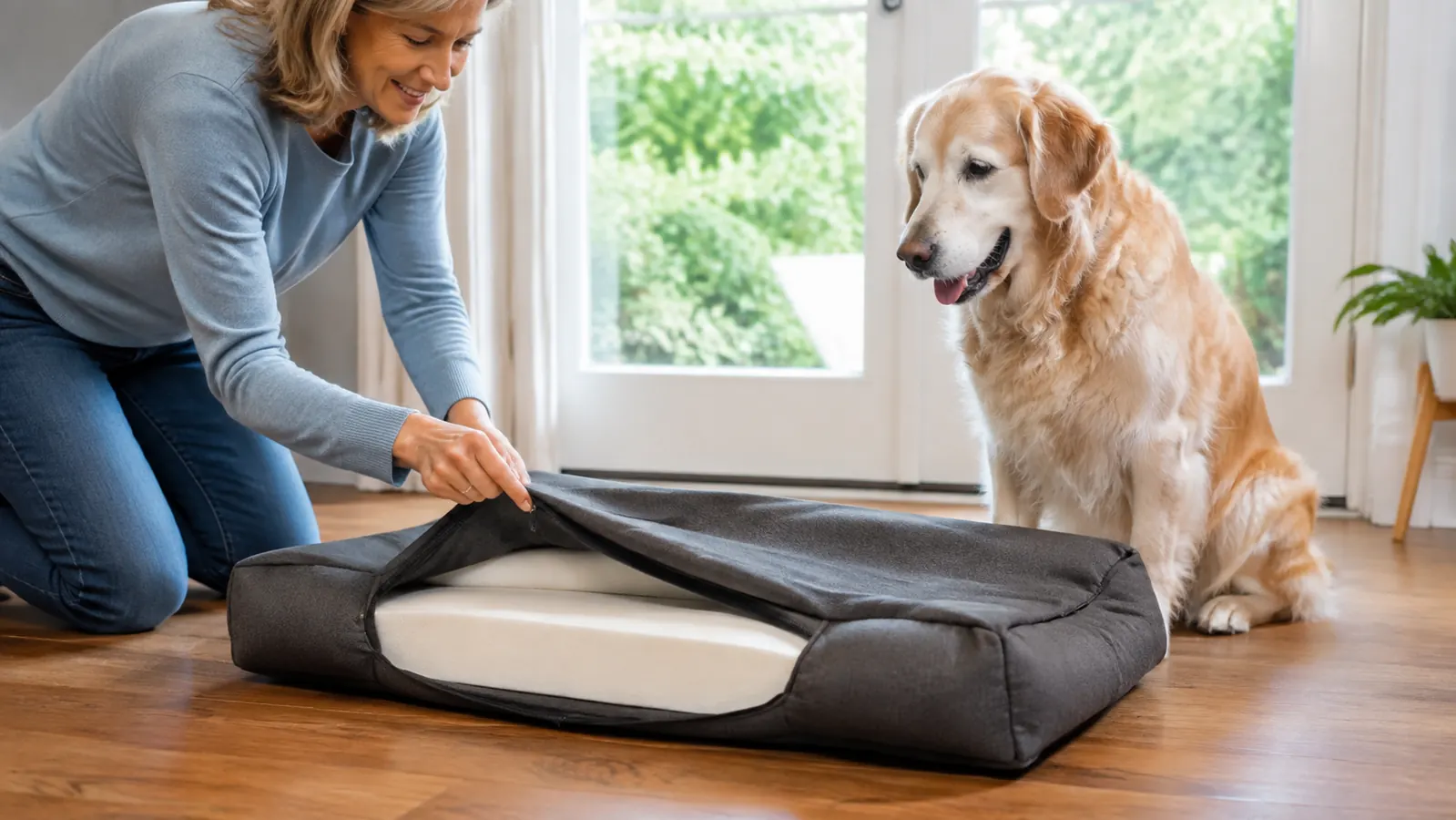
Here is the part the photos never tell you: the cover is removable and washable, and you will use that feature a lot more than the marketing implies. Molly is not a drooler, but she is a burrower, and a dog that burrows carries dirt, crumbs, and the occasional hidden snack into the folds. With the raised edges and the pocket between the cover and the foam, crumbs collect in the seams. You will be unzipping the cover more often than you guessed.
That is not a flaw, it is a design fact. A washable cover is the entire reason to buy this bed over a solid slab of foam. The question is whether the cover survives the washing, and that gets its own section, because it is the part most reviews skip.
If I were setting expectations with a friend the way I wish the listing had set them with me, I would say: plan to unbox it on a day you can leave it open somewhere airy, and do not put the dog on it that first night if she is the sensitive type. A dog with a good nose will skip the bed until the smell clears, and then you have a nice lump of foam nobody is using. Air it first and you skip that whole scene.
How the Cover Survives Machine Washing
I wash the cover every ten days, or sooner if it looks like a dog slept in it, which is always. Twenty washes in, the cover has held its color, kept its seams, and the zipper still runs smooth and catches at the other end. That sturdy zipper matters more than people think, because a zipper that fails means a cover you cannot get off, and a cover you cannot get off means a bed you eventually throw out. This one unzips the way it did on day one.
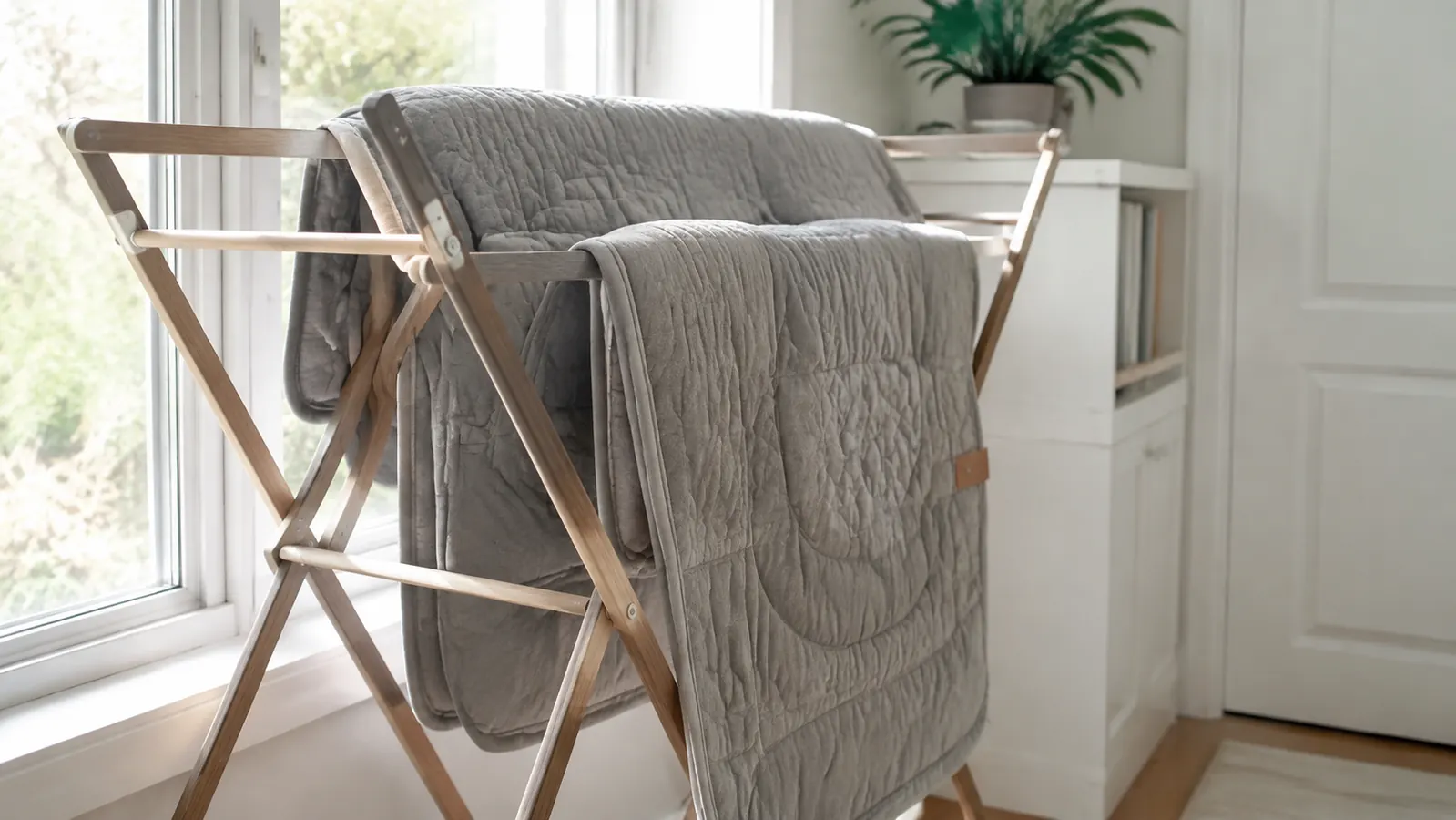
I wash it in cold water on the gentle cycle with a mild detergent, no bleach, no fabric softener, and I line dry it. I do not risk the dryer. Line drying takes most of a day, so I keep a clean second cover in the rotation. If you only have the one cover, plan your laundry day around your dog. That planning is the only real cost, and it is small.
One genuine warning about washing: the cover and the foam are separate, so the foam never goes in the machine. It does not need to. But the foam base does need a spot where it can breathe while the cover is drying, otherwise moisture trapped in the pocket can turn stale. I just leave the foam standing against the wall where the bed lives. Leave it alone, give it air, and it comes back clean.
One more habit that has kept the cover looking new: I unzip it fully, not halfway, and I pull the foam out before I wash. Zippers fail fastest when they are forced around a bend with foam still inside. Two minutes of effort saves me the annoyance of a split zipper a year from now. Little routines like that are the difference between a bed that lasts and a bed that gets replaced twice.
What Orthopedic Actually Means, and Where It Falls Short
Lots of beds say orthopedic and mean we put a slab of foam inside a cover and called it a day. The Bedsure at least makes an effort: a dense base foam, a softer comfort layer, and a scooped center that keeps the hip and spine off the floor. For a small senior dog that is the difference between sleeping on a support surface and sleeping on the carpet with extra steps. I can feel that difference through the fabric.
Where it falls short, honestly: the edges are firm and tall, and a dog who likes to sprawl flat with all four legs out will fight the raised rim. Molly curls, so it suits her. A spreader will not love it. And there is no cooling layer worth naming, so in a hot summer room a heavy-coated dog may slide off in the middle of the night and sleep on the floor. I watch for that and it happens maybe once a month.
And the sizing. I keep coming back to it because it is the most common complaint and the easiest to avoid. A bed that is too small is a bed your dog uses as a pillow while sleeping on the floor next to it. If you are choosing for a senior dog with any joint trouble, err on the larger side, and accept that the small dogs in the title refers to genuinely small dogs.
My honest bottom line on the category: orthopedic is not a regulated term, so the label proves less than the foam does. What you are paying for here is a dense base, a soft top layer, a scooped center, and a cover you can unzip. Those four things, in a small dog, delivered what I needed. The marketing added nothing I would repeat to a friend, and the hardware added plenty.
What I Liked
- Dense foam holds its shape after six months with no permanent trough
- Removable cover unzips cleanly and survives two dozen machine washes
- Raised, padded edges give a small senior dog a headrest and a nest feel
- Scooped center keeps the hip and spine up off the cold floor
- Fairly priced for the foam quality when you stay on a budget
Where It Falls Short
- Runs small, so order up a size for most dogs
- New-bed foam smell needs a day of airing out before first use
- Firm raised edges are wrong for a dog who sleeps flat and sprawled
- No real cooling layer for hot rooms or heavy coats
- Cover needs line drying, so keep a backup if you only have one
Who This Is For
This bed is for the person with a small aging dog who still wants to sleep in the room with them. If your dog is small to medium, sleeps curled, and your top concern is a soft, supportive place that is easy to keep clean, the Bedsure is a strong, budget-friendly pick. It is also for anyone tired of washing a foam slab by hand, since the removable cover is the feature most people end up valuing the most.
If you are still deciding between this and a generic memory-foam slab, my comparison of the two digs into which one actually survives a senior dog. And if you are wondering whether the whole category is worth the money for an older pet, the list of reasons an orthopedic bed earns its place early is the one I point people to first.
It also suits the budget shopper, and I mean that respectfully. The price sits well below the premium orthopedic names, yet the foam and the cover behave like beds that cost more. For a petite senior dog who does not need the oversized construction of a giant-bed brand, this is a lot of support for not a lot of money.
Who Should Skip It
Skip it if your dog sleeps stretched flat with legs out, because the raised edges will annoy more than they support. Skip it if you need a true cooling bed for a hot climate or a heavy-coated dog. And if your dog is closer to fifty pounds than fourteen, read the sizing carefully and lean toward a larger orthopedic bed built for bigger frames, because this one is built for the small end of the market.
Skip it too if you want a machine-dryable setup and do not want to plan around a day of line drying. That is the one honest daily cost here. If you cannot live with a cover on a drying rack every ten days, this is not the bed that fits your routine, and there is nothing wrong with that.
And be honest about how your dog really sleeps before you order. A neighbor bought the same bed for her chunky beagle, and the beagle sleeps draped over the side every night because the rim rides up her belly. It looks uncomfortable, but she chooses it, my neighbor says. The bed was not built for that, and neither was the beagle's patience. Know your dog's habits first.
The Advice I'd Give a Friend Buying a Senior Dog Bed
Get the size right, air the new-bed smell out for a day, and plan for the cover to need washing more often than you expect. That is the honest manual for this bed after six months with Molly. If her story sounds like yours, see today's price and the real size chart on Amazon, and order up if you are between sizes.
Amazon Check Today's Price on Amazon →